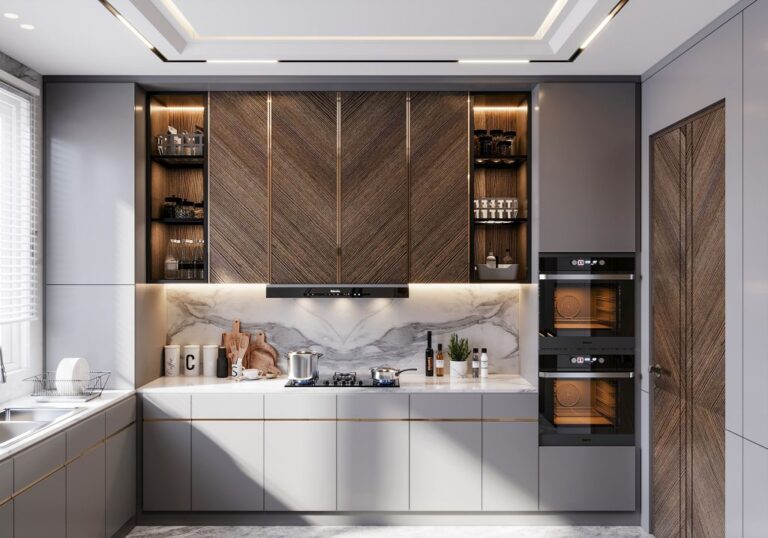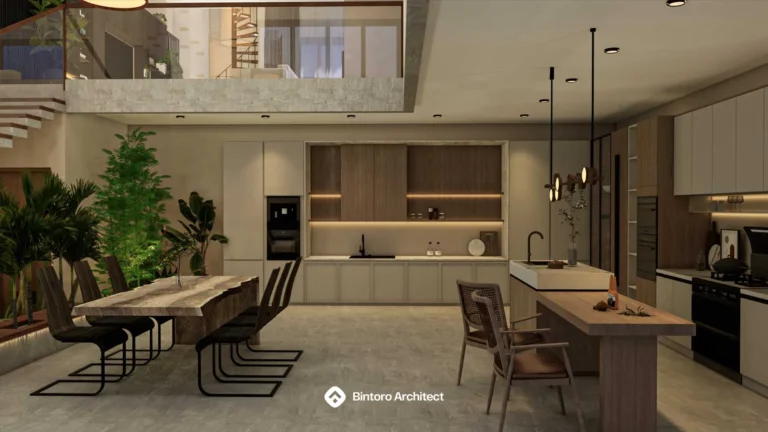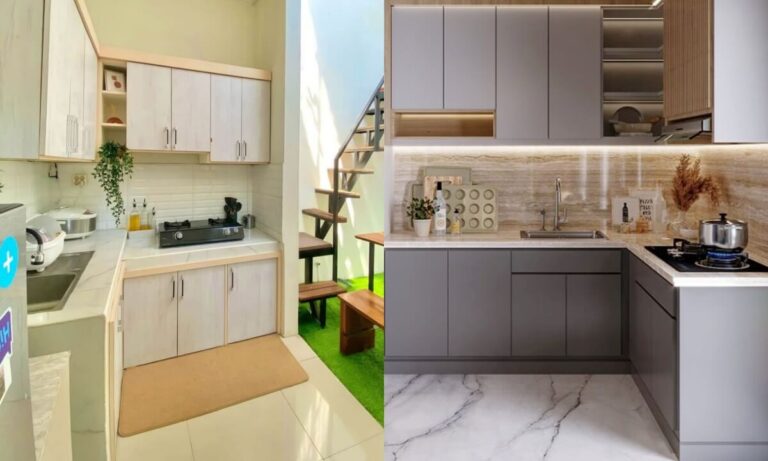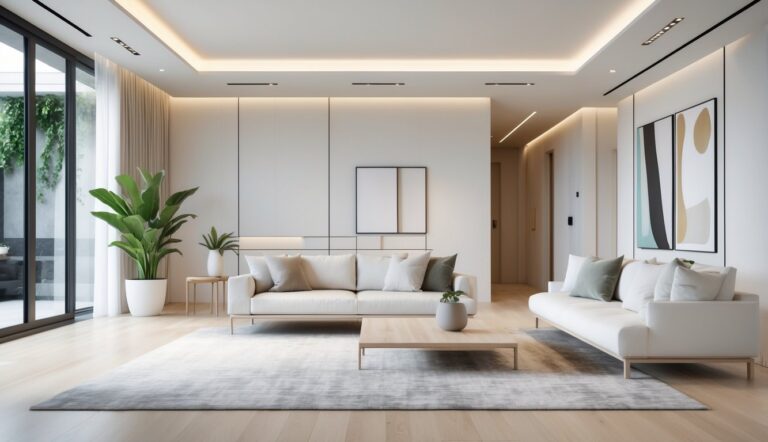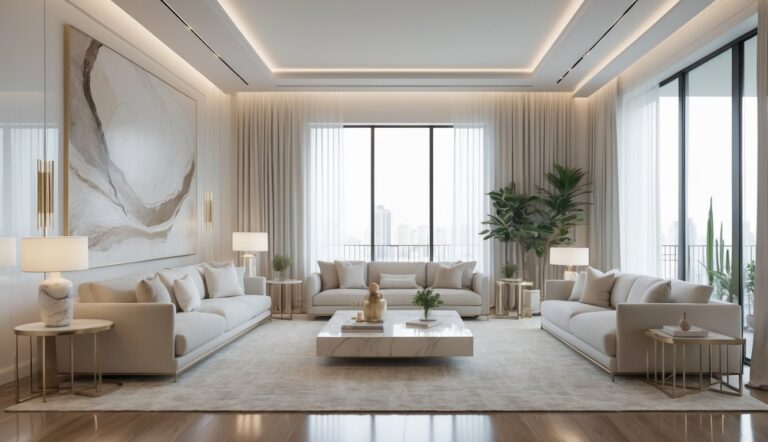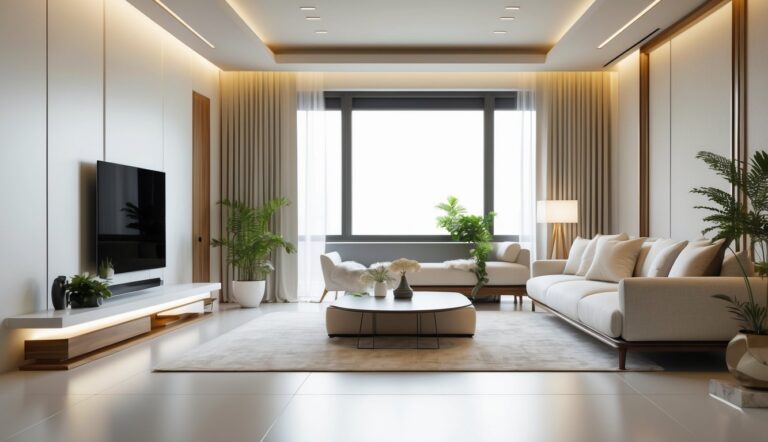
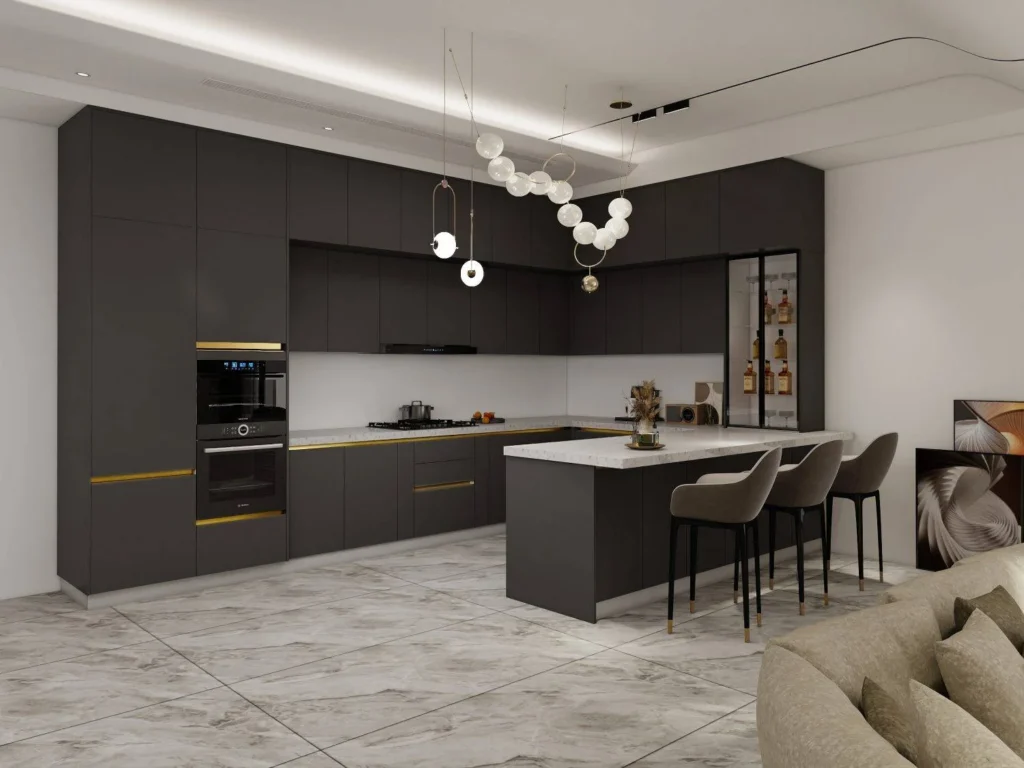
You’ll see that modern luxury kitchens balance striking aesthetics with real comfort, so your space looks refined and supports how you live. Expect details like warm natural materials, smart integrated appliances, and layouts that prioritize movement and social moments.
A thoughtfully designed luxurious kitchen gives you elevated materials, efficient ergonomics, and personalized accents that make cooking and gathering more enjoyable. The article will walk you through the visual trends, comfort-focused layouts, sustainable choices, and small custom touches that keep a luxury kitchen beautiful and future-ready.
Key Elements of Luxurious Kitchen Design
Focus on materials that last and look refined, appliances that simplify tasks, and layered lighting that highlights surfaces and supports different activities.
High-End Materials and Finishes
Choose natural stones like Calacatta or Carrara marble for countertops and full-height backsplashes where veining becomes a focal point. Use honed or leathered finishes to reduce visible wear and to hide fingerprints compared with polished surfaces.
Combine solid hardwoods—walnut or oak—for cabinetry with lacquered or matte lacquer fronts for contrast. Specify dovetail drawers and soft-close hinges for durability and tactile quality.
Metal accents in brushed brass, satin nickel, or blackened steel provide a luxury feel; apply them to handles, faucets, and integrated appliance panels for a cohesive palette.
Consider engineered quartz in high-traffic zones for stain resistance, and apply antimicrobial surface coatings in food prep areas. Prioritize high GSM plywood carcasses and stone-supported islands to prevent sagging over time.
Integrated Smart Appliances
Select built-in refrigerators, column ovens, and flush-mounted induction cooktops to maintain clean sightlines and uninterrupted cabinetry runs. Choose appliances with Pro-style performance—forced-convection baking, steam assist, and 20–30-minute quick-cool functions—to support serious cooking without clutter.
Look for appliances with Wi‑Fi and app control for remote preheat, inventory alerts, and maintenance diagnostics. Opt for undercounter dishwashers with adjustable racks and noise ratings under 45 dB to keep social areas quiet.
Integrate a concealed ventilation system with variable CFM and automatic boost tied to cooktop sensors. For convenience, add a warming drawer, built-in coffee system, and a beverage column with separate temperature zones.
Lighting Concepts for Elegance
Layer lighting: combine recessed ambient fixtures, directional task lights over prep zones, and accent lighting that washes cabinets or highlights a marble island edge. Use color temperature in the 2700–3000K range for warm, inviting tones that flatter wood and stone.
Install dimmers on all circuits and scene controls that recall lighting profiles—cooking, dining, entertaining—to adapt the mood instantly. Add LED strip lighting inside cabinetry with motion sensors for practical, discreet illumination.
Specify CRI ≥ 90 fixtures to show true colors of food and finishes. Use low-glare diffusers and consider pendant clusters over islands sized to the counter dimensions (each pendant roughly 1/3 the island width) for balanced scale and proportion.
Aesthetic Trends in Modern Luxurious Kitchens
Expect a refined balance of color restraint, bold focal surfaces, and tailored storage that prioritize both visual impact and daily comfort.
Minimalist and Timeless Color Palettes
You should choose palettes that reduce visual clutter and lengthen the perceived lifespan of your kitchen.
Popular combinations pair warm neutrals—soft taupe, warm gray, and cream—with deep accents like charcoal or forest green to add depth without overpowering the space.
Consider finishes: matte cabinet fronts dampen reflections and hide fingerprints, while satin metallics on hardware add subtle sheen.
Use a controlled accent strategy: limit bold colors to one wall, an island base, or open shelving backs to keep the look cohesive.
Lighting alters color perception, so plan layered lighting—task, ambient, and accent—to preserve the palette’s intent at different times of day.
Choose paint and countertop samples and view them under your actual kitchen lights before finalizing.
Statement Islands and Countertops
You want the island to function as a centerpiece—both visually and practically.
Select a countertop material with a distinct pattern or color contrast to the surrounding cabinetry, such as a marble-look quartz island against matte dark cabinets.
Prioritize scale and proportion: make the island deep enough for prep, seating, and integrated appliances if you intend it as a social hub.
Add built-in features like a prep sink, under-counter refrigeration, or concealed trash drawers to keep surfaces uncluttered.
Edge profile and thickness influence the island’s presence.
Thicker waterfall edges or bold bullnose profiles convey luxury; thinner profiles with a contrasting skirt lend a modern, lightweight feel.
Custom Cabinetry Designs
Custom cabinetry should reflect how you use the kitchen, not just how it looks.
Opt for tailored storage solutions—appliance garages, pull-out pantries, and drawer inserts sized for your cookware and utensils—to reduce countertop clutter.
Face-frame or full-overlay options change the visual rhythm; concealed hinges and integrated handles create uninterrupted planes.
Mix closed storage for a calm backdrop with curated open shelving to display high-use items or decorative pieces.
Material choices matter: plywood cores with real-wood veneers resist warping and give a refined finish, while lacquered doors provide color consistency.
Specify soft-close mechanisms and dovetailed drawer construction to improve durability and daily experience.
Comfort-Oriented Kitchen Layouts
Design choices focus on sightlines, movement, and storage so you can cook, socialize, and clean with minimal friction. Prioritize seating, clear work zones, and reachable storage to make the space both elegant and effortless.
Open-Plan Kitchen Concepts
Keep sightlines clear between the cooking area and living or dining zones to support interaction while you work. Use an island with integrated seating to create a casual dining spot and a prep surface; choose a 90–120 cm wide island depth if you want both seating and a functional worktop.
Define zones with consistent flooring and lighting rather than walls. Pendant lights over the island, recessed task lighting at counters, and lower-intensity ambient lighting in the living area help you switch activities without visual clutter.
Maintain at least 1.2–1.5 m circulation aisles around the island to avoid bottlenecks, especially during meal prep or when guests are present.
Ergonomic Workflows
Arrange your primary triangle—sink, stove, and refrigerator—so each leg measures between 1.2 and 2.7 meters for efficient movement. Place frequently used items (cutting boards, knives, prep bowls) within 60 cm of the main prep surface to reduce steps and improve speed.
Design counter heights to match user height: 90–95 cm suits most adults for standard prep, while a lower 85 cm section benefits children or seated tasks. Include varied work heights—one station for chopping, one for baking—to reduce strain. Use pull-out drawers for pots and deep drawers for plates to avoid bending and reaching into base cabinets.
Functional Storage Solutions
Prioritize deep drawers and pull-out trays over fixed shelves to keep heavy items accessible. Use vertical dividers for baking sheets and tray storage, and allocate a dedicated drawer for everyday cutlery, arranged with a shallow insert to keep tools visible and reachable.
Incorporate tall pantry units with adjustable shelves and pull-out baskets to store bulk goods at eye level. Add appliance garages or lift-up cabinets for small appliances to keep counters clear but within easy reach. Consider labeled zones—breakfast, baking, cleaning—so everyone in your household can find and return items quickly.
Personalization and Unique Accents
You should choose details that reflect how you live and cook while elevating aesthetics and comfort. Focus on durable, tactile finishes and hardware that age well and support daily use.
Tailored Backsplash and Wall Treatments
Select materials that resist staining and heat while adding visual personality. Consider honed marble or porcelain slabs behind the range for easy cleaning and a continuous look; use a patterned encaustic tile at the coffee station to create a focal point that hides splatters.
Install a full-height backsplash behind wet zones and a shorter splash behind prep counters to balance protection and cost. Add a washable, low-VOC paint on non-backsplash walls in a warm neutral to complement tile tones.
Use texture to add depth: fluted ceramic panels, leathered stone, or hand-applied plaster create tactile contrast without compromising maintenance. For lighting, integrate LED strip lighting under upper cabinets and behind open shelving to highlight the wall finish and improve task visibility.
If you entertain, include a decorative niche with a contrasting tile pattern to display serving ware; this becomes both practical and personal.
Exclusive Hardware and Fixtures
Choose hardware that feels substantial in hand and matches your kitchen’s use patterns. Opt for solid-brass or stainless-steel pulls and knobs with a finish you can repair or replate later—brushed brass, satin nickel, or matte black hold up visually and physically.
For faucets, pick models with ceramic cartridges and a high-arc spout for filling pots; consider touch-activated or pull-down spray functions to speed cleanup. Match finishes between faucets, cabinet pulls, and appliance trims for a cohesive look.
Prioritize ergonomic factors: larger, contoured pulls for heavy drawers, soft-close hinges, and full-extension drawer slides for easy access. Add one signature piece—an oversized pot-filler in a contrasting finish or a custom-engraved waste bin lid—to give your kitchen a unique, memorable accent.
Sustainability in Luxury Kitchen Design
Sustainable luxury balances premium aesthetics with measurable environmental gains. Expect durable materials, lower operating costs, and appliances that cut energy use without sacrificing performance.
Eco-Friendly Materials
Choose hardwoods certified by the Forest Stewardship Council (FSC) or reclaimed wood for cabinets and open shelving to ensure traceable sourcing and long service life. Engineered wood with formaldehyde-free adhesives reduces indoor VOCs while delivering a high-end finish. For countertops, consider quartz made from recycled glass or porcelain slabs, which resist staining and last decades, lowering long-term replacement needs.
Use low-VOC paints and water-based finishes on trim and cabinetry to improve indoor air quality. For flooring, specify sustainably harvested oak, bamboo with formaldehyde-free glue, or large-format porcelain tiles that mimic stone but require less maintenance. Ask your fabricator for material data sheets and end-of-life recycling options to confirm environmental claims.
Energy-Efficient Appliances
Prioritize appliances with ENERGY STAR certification or equivalent local ratings; they typically use 10–50% less energy than standard models. Choose an induction cooktop for faster, more efficient heating and a convection oven with proven energy savings for similar cooking results at lower temperatures. Look for refrigerators with adaptive defrost and variable-speed compressors to reduce runtime.
Select dishwashers with soil sensors and eco cycles, which cut water and electricity use. For range hoods and ventilation, specify variable-speed motors and efficient lighting (integrated LED). When you commission installation, size ventilation and electrical circuits to appliance ratings to avoid inefficiencies from undersized systems.
Future-Proofing Luxurious Kitchens
Plan for adaptability from the start so your kitchen stays relevant as technology and lifestyle change. Choose modular cabinetry and open channels for wiring and plumbing to make future upgrades painless.
Prioritize durable, low-maintenance materials that age well, such as engineered stone countertops and real wood or high-quality veneers with protective finishes. These choices protect your investment while preserving a warm, luxurious look.
Integrate smart infrastructure rather than single-use gadgets: conduit for future data/charging, dedicated circuits for high-power appliances, and neutral control hubs that accept new devices. This lets you add smart ovens, refrigerators, or lighting without rewiring.
Balance aesthetics and ergonomics with appliance placement, clear work triangles, and at least 1 m of circulation around islands. Comfort-focused details — soft-close drawers, adjustable-height surfaces, and task lighting — improve daily use and support long-term accessibility.
Consider sustainability as a future-proofing criterion: energy-efficient appliances, water-saving fixtures, and locally sourced materials reduce operating costs and align with evolving regulations. Label or document materials and systems to simplify maintenance and future renovations.
Quick reference — Practical upgrades to plan for now:
- Electrical: extra circuits, grounded outlets, USB/USB-C points
- Data: Ethernet drops and conduit for future fiber or smart hubs
- Plumbing: accessible shutoffs, space for instant hot-water units
- Layout: flexible zones, knock-out panels for appliance swaps
Make decisions that protect both form and function so your kitchen remains luxurious, usable, and ready for what comes next.